15,000–40,000 years ago: First Domestication of Wolves
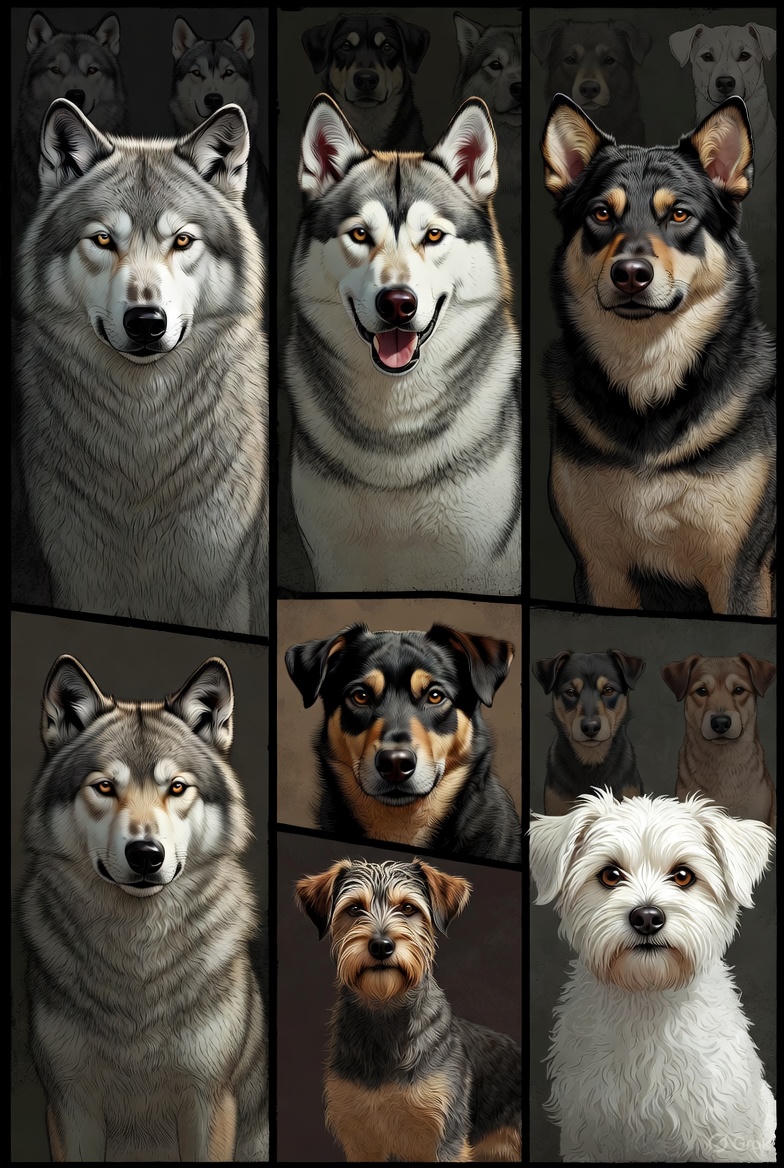
Genetic and archaeological evidence confirms that the domestication of the gray wolf (Canis lupus) into the domestic dog (Canis familiaris) occurred independently in several regions of Eurasia between approximately 40,000 and 15,000 years ago. The Bonn-Oberkassel dog, buried alongside humans 14,700 years ago in present-day Germany, is the oldest undisputed domestic dog remains. Early dogs were smaller, had shorter muzzles, and showed reduced fear of humans. This mutualistic relationship provided humans with hunting assistance and camp guarding while dogs received food and protection. Recent studies published in Science (2022) suggest at least two separate domestication events – one in Eastern Asia and another in Western Eurasia. This period marks the beginning of the most successful interspecies alliance in history.
9000–7000 BC: Dogs in Neolithic Farming Communities
As humans transitioned from hunter-gatherer to agricultural societies, dogs adapted rapidly. Sites such as Jiahu in China (7000 BC) and Çatalhöyük in Turkey reveal clear morphological differences from wolves: smaller size, crowded teeth, and shorter snouts. Dogs helped protect grain stores from rodents, herded early livestock, and served as early warning systems against predators or raiders. Isotopic analysis of dog remains shows they were deliberately fed agricultural products, proving they were valued members of the community rather than scavengers.
3500 BC: Birth of Recognizable Breeds in Ancient Egypt
Tomb paintings, sculptures, and mummified remains from Ancient Egypt depict at least five distinct types: the slender sight-hound Tesem (ancestor of the modern Saluki and Pharaoh Hound), heavy mastiff-type guards, medium spitz-like dogs, and small companion dogs. The Saluki is considered the oldest surviving breed. Dogs held religious significance – the god Anubis was jackal-headed, and many dogs were mummified and buried with their owners. Egyptian royalty gifted Salukis as supreme diplomatic presents across the ancient world.
1000 BC–500 AD: Greek and Roman Specialization
Greek writers such as Xenophon and Aristotle classified dogs into hunting (Laconian, Cretan), herding, and guard categories. Romans went further: the giant Molossus from Epirus became the ancestor of modern mastiffs and was used in war and arena fights; the swift Vertragus (early greyhound) hunted by sight; small Melitan dogs were luxury lap dogs for Roman matrons. The Roman army spread specialized breeds throughout the Empire from Britain to Syria.
Middle Ages: European Functional Breeding
Feudal Europe developed highly specialized working dogs. Bloodhounds tracked game and criminals across vast distances; greyhounds and deerhounds coursed in royal hunts; mastiffs guarded castles; terriers eradicated vermin in barns. Monasteries, especially St. Hubert in Belgium, refined the Bloodhound line that later became the modern St. Hubert Hound. Most modern scent-hound breeds trace their roots to this period.
1873–1884: Creation of the Modern Kennel Club System
The Victorian passion for dog shows revolutionized breeding. The Kennel Club (UK) was founded in 1873 and published the first stud book in 1874. The American Kennel Club followed in 1884. Written breed standards, closed stud books, and championship shows transformed dogs from working tools into pedigree animals. Within fifty years, more than 400 modern breeds were formalized – most of the breeds we recognize today were created or heavily refined during this period.
1935–1956: International Standardization with the FCI
The Fédération Cynologique Internationale (FCI), founded in 1911 but restructured after WWII in 1935 and again in 1956, became the world’s largest canine organization, recognizing 356 breeds as of 2025. It established unified international standards, enabling cross-border registration and competition. This period also saw the recovery of many European breeds nearly lost during the World Wars.
2020–2025: Newest Breed Recognitions Worldwide
Even in the 21st century, new breeds continue to gain full recognition. The AKC added the Bracco Italiano (2022), Lancashire Heeler (2024), and is reviewing others for 2025–2026. The FCI recognized the Russian Toy and Mudi, and several rare landrace populations are under evaluation. Genetic testing and health screening requirements are now mandatory, ensuring modern breeds meet both historical authenticity and contemporary welfare standards.